
Learning for the Future
Project management & knowledge transfer – be prepared
A project has been completed, the tool is running smoothly, and series production has been approved. For many, that's where the story ends. However, this is precisely where the phase that often makes the biggest difference in practice begins: What will happen to all the experience you and your team have gained?
You know how it is in everyday life. Some information is in the documentation, some is in emails, and much remains in the minds of individual employees. When the next project comes along, it feels like you're starting all over again. Right now, though, you have all the insights that would be important for future components and tools. You know what adjustments were necessary, why certain errors occurred, which parameters were stable in the end, and which considerations were decisive during the project.
If this information disappears, mistakes will be repeated. Not just once, but repeatedly for years to come. This increases costs unnecessarily, prolongs development times, and means that valuable decisions must be reworked repeatedly. At the same time, the early stages of a new project are the most cost-effective time to exert influence. Later on, every change becomes more complex and expensive, and there is less opportunity for optimization.
That's why a clean end-of-life phase is so valuable. When project data is stored in an understandable, clear, and accessible way, a wealth of experience is created that can be accessed at any time. Having to analyze how you solved a similar problem last summer when working on the next component is much more time-consuming than finding the answer with just a few clicks. This saves time, prevents duplication of work, and helps you be better prepared for the next initial meeting.
Many companies that consistently take this step report that they can start new projects much more efficiently. Decisions are made faster because the fundamentals are already understood. Risks become apparent earlier. The team also doesn't have to have the same discussions over and over again because it's clearly documented why a particular solution worked.
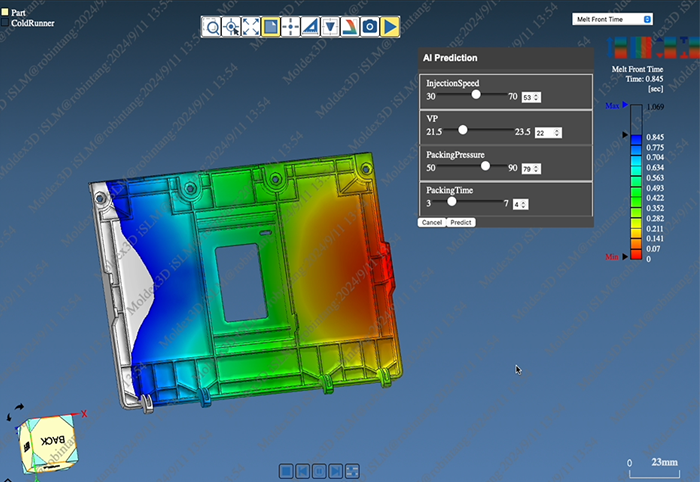
In our 'Spritzgießen Excellence Training', we address this exact point. The focus is not only on sampling on the machine but also on how you can transfer simulation findings to production in a way that makes them understandable and usable—and how real machine data flows back into development. Moldex3D iSLM provides the basis for this process. Project data is recorded in a traceable manner and later forms an experience pool that can be used to launch new components faster and more reliably. See how powerful this can be in our short video, which predicts injection pressures, filling behavior and warpage without running a single simulation.
If you would like to discuss how this could work in your company, we would be happy to arrange a personal appointment. If you want to get started right away, you can register for training here.
(Image source: CoreTech System Co., Ltd.)